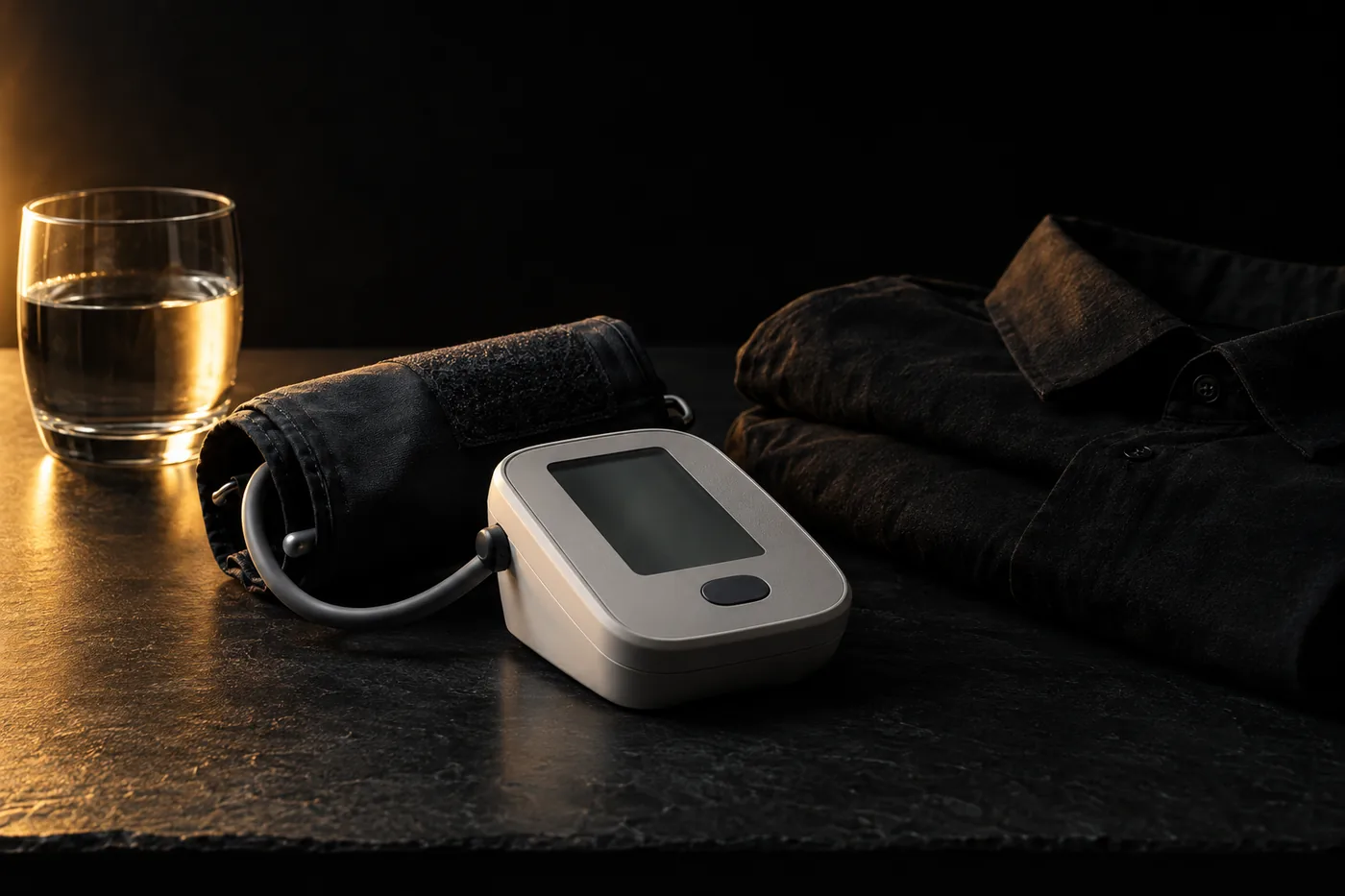
We talk about testosterone like it comes from the gym, the steak, or a prescription. Those things matter. But a big part of the work happens somewhere most of us overlook: in bed, with the lights off.
If you are over 50, tired by mid-afternoon, losing your edge in the weight room, or not feeling like yourself, take a hard look at your sleep before you look anywhere else. Your nights may be costing you more than energy.
Why testosterone matters after 50
Testosterone is more than a sex hormone. It helps a man keep muscle and bone, supports red blood cell production, and plays a role in energy, motivation, mood, and confidence. When it runs low, men can experience lower sex drive, erectile problems, fatigue, reduced strength and endurance, poor concentration, irritability, and low mood.
Levels naturally slide as we age. Research following men over time found an average decline of about 1.6% per year. Other research suggests that health problems such as obesity, diabetes, heart failure, and stroke may drive that decline as much as age itself. That is good news. It means a lot of what happens to your testosterone is still in your hands, and sleep is one of the easiest places to start.
Your body makes testosterone while you sleep
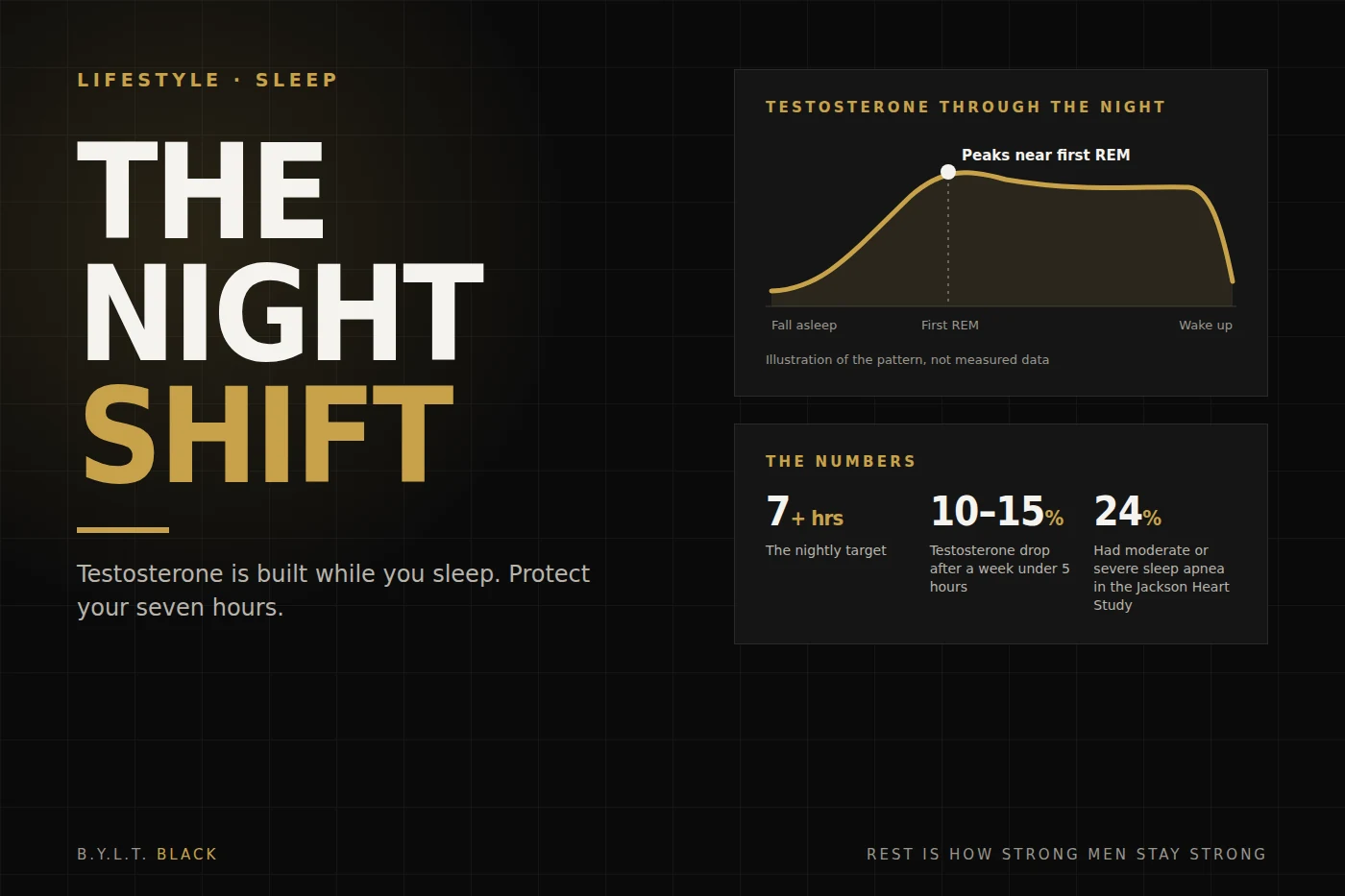
Here is how the night shift works. Testosterone begins to rise once you fall asleep, peaks around the first episode of REM (dream) sleep, and stays elevated until you wake up. That is a big reason men tend to have their highest levels in the morning.
In other words, sleep is not downtime for your hormones. It is production time. Cut the shift short or keep interrupting it, and the factory puts out less.
What the research shows
Short sleep, lower testosterone
In a well-known University of Chicago study, healthy young men slept less than five hours a night for a week. Their testosterone dropped 10% to 15%, which the researchers compared to aging 10 to 15 years. The men also reported that their mood and vigor declined as the week went on.
Older men: more sleep, more testosterone
In a study of healthy men ages 64 to 74, the amount of sleep they got at night independently predicted their morning testosterone levels. More sleep was linked with higher total and free testosterone. The study was small, but it speaks directly to men in our age group.
An honest note on the science
Not every study agrees. A review of 18 studies found that pulling an all-nighter (24 hours or more without sleep) clearly lowered testosterone, while short stretches of partial sleep loss did not show a significant effect when the studies were combined. The takeaway: one rough night will not wreck your hormones, but chronic short sleep, broken sleep, and sleep disorders are a different story, especially when they stack up for years.
Sleep apnea: the testosterone thief
If there is one sleep issue every Black man over 50 should know about, it is obstructive sleep apnea. This is when your airway repeatedly collapses during sleep, cutting off breathing and jolting you out of deep sleep, sometimes hundreds of times a night.
In the Jackson Heart Study, about 24% of African American participants had moderate or severe sleep apnea, and roughly 95% of them had never been diagnosed.
A review of 18 studies with more than 1,800 men found that sleep apnea was linked with lower testosterone, even after accounting for age and body weight.
Sleep apnea is also tied to high blood pressure and heart disease, conditions that already hit our community hard.
Warning signs: loud snoring, someone telling you that you stop breathing at night, waking up gasping, morning headaches, getting up often to urinate, and feeling exhausted even after a full night in bed.
One more reason this matters: testosterone therapy can worsen sleep apnea. If you are considering testosterone replacement, get your sleep checked first. Treating the sleep problem may be part of the fix.
Signs your sleep is draining your testosterone
- You need caffeine just to get going, and more of it every month
- The afternoon crash hits hard, usually after lunch
- Your workouts feel heavier and recovery takes longer
- Your sex drive has dropped or morning erections are rare
- You feel short-tempered, flat, or unmotivated
- You are adding weight around the middle even though your eating has not changed much
Any one of these can have other causes. Several together are worth a conversation with your doctor and a blood test, ideally taken in the morning when levels are highest.
Protect the night shift
The goal is simple: give your body seven or more hours of solid, uninterrupted sleep, since regularly sleeping six hours or less is not enough to sustain health.
- Same wake-up time every day. A steady schedule keeps your body clock, and your hormone rhythm, on track.
- Protect your first REM cycle. Testosterone peaks around the first REM period, so falling asleep at a regular time and avoiding late alcohol, which disrupts REM, gives that peak a better shot.
- Write the list down. If your mind races with everything that needs doing, spend five minutes writing tomorrow’s to-do list. People who did this in a sleep-lab study fell asleep faster than those who wrote about what they had already finished.
- Set a shutdown time. Pick an hour when emails, bills, and the news are done for the night.
- Cool, dark, quiet. Cut screens and bright light before bed, and keep the bedroom cool.
- Manage your weight and keep training. Extra belly fat is linked with both sleep apnea and lower testosterone. Strength training helps both.
Naps: a smart backup, not a replacement
A short afternoon nap can rescue energy when your night falls short. NASA research found that a nap of about 26 minutes improved alertness by up to 54% and performance by 34%.
Keep it short, 10 to 30 minutes, in the early afternoon. Longer naps, frequent naps, and morning naps have been linked with higher mortality risk in older adults. If you feel like you need long naps every day, that is a sign your nighttime sleep, or possibly sleep apnea, needs attention. Testosterone is produced mainly during your main night of sleep, so naps help with energy but do not replace that overnight production.
Supplements worth knowing about
No supplement replaces good sleep, and none of these is a substitute for medical care if your testosterone is truly low. Talk with your doctor or pharmacist first, especially if you take blood pressure, diabetes, blood thinner, or thyroid medications.
Magnesium
Magnesium supports muscle relaxation and nervous-system calm. In older men, higher magnesium levels were linked with higher testosterone, and a small trial in older adults found 500 mg daily improved several sleep measures. A 2026 review, however, found the sleep evidence inconsistent overall. It is a reasonable, low-cost option, especially if your diet is light on leafy greens, beans, nuts, and whole grains. Men with kidney disease should check with a doctor first.
Zinc
Zinc is essential for testosterone production. In one study, older men who were marginally low in zinc nearly doubled their testosterone after several months of supplementation. The key word is “low.” Zinc helps if you are short on it; it is not a booster for men who already get enough. Too much zinc over time can lower your copper levels, weaken immunity, and reduce good cholesterol. Stay within the dose on a quality label, and consider asking your doctor to check your levels.
Ashwagandha
This herb has the most direct research for our age group. In a 16-week trial of overweight men ages 40 to 70 with low energy, ashwagandha was associated with a 14.7% greater increase in testosterone than placebo. Some ashwagandha preparations may also help with insomnia. Cautions are real: it is considered possibly safe only short term (up to three months), rare cases of liver injury have been reported, and it may interact with diabetes, blood pressure, thyroid, and sedative medications. Men with thyroid or autoimmune conditions should avoid it unless their doctor approves.
Smart buying rules
- Choose brands with third-party testing (USP or NSF seals).
- Start one supplement at a time so you know what is working.
- Skip “testosterone booster” blends with long ingredient lists and big promises.
- Get a morning blood test before and after if you are trying to improve testosterone. Data beats guessing.
The B.Y.L.T. bottom line
We were taught to grind. But the man who gives up sleep to get more done is quietly trading away the hormone that keeps him strong, driven, and sharp. Testosterone is built at night. Protect your seven hours, nap short and early when you need it, get your snoring checked, and support your body with smart choices instead of shortcuts.
Rest is not weakness. Rest is how strong men stay strong.
Built for longevity. Driven by a purpose.
Key sources
- Gao et al. (2026). Daytime napping patterns and all-cause mortality in older adults. JAMA Network Open.
- Jiao et al. (2022). Obstructive sleep apnea and male serum testosterone. Andrology.
- Kim & Cho (2019). Obstructive sleep apnea and testosterone deficiency. World Journal of Men’s Health.
- Leproult & Van Cauter (2011). Effect of 1 week of sleep restriction on testosterone levels in young healthy men. JAMA.
- Lopresti et al. (2019). Hormonal and vitality effects of ashwagandha in aging, overweight males. American Journal of Men’s Health.
- NCCIH. Ashwagandha. National Institutes of Health.
- NHLBI (2018). Sleep apnea common but largely undiagnosed in African-Americans.
- Penev (2007). Sleep and morning testosterone levels in older men. Sleep.
- Su et al. (2021). Partial and total sleep deprivation and serum testosterone in healthy males. Sleep Medicine.
- Watson et al. (2015). Recommended amount of sleep for a healthy adult. Sleep.
These are the ten sources the article leans on most. Every other study mentioned is linked where it appears in the text.
This article is for general information only and is not medical advice. Low testosterone should be diagnosed with blood testing by a qualified healthcare provider. Talk with your doctor before starting any supplement or hormone therapy, especially if you take prescription medications or have a health condition. If you snore loudly, stop breathing during sleep, or feel exhausted despite a full night in bed, ask your doctor about a sleep evaluation.