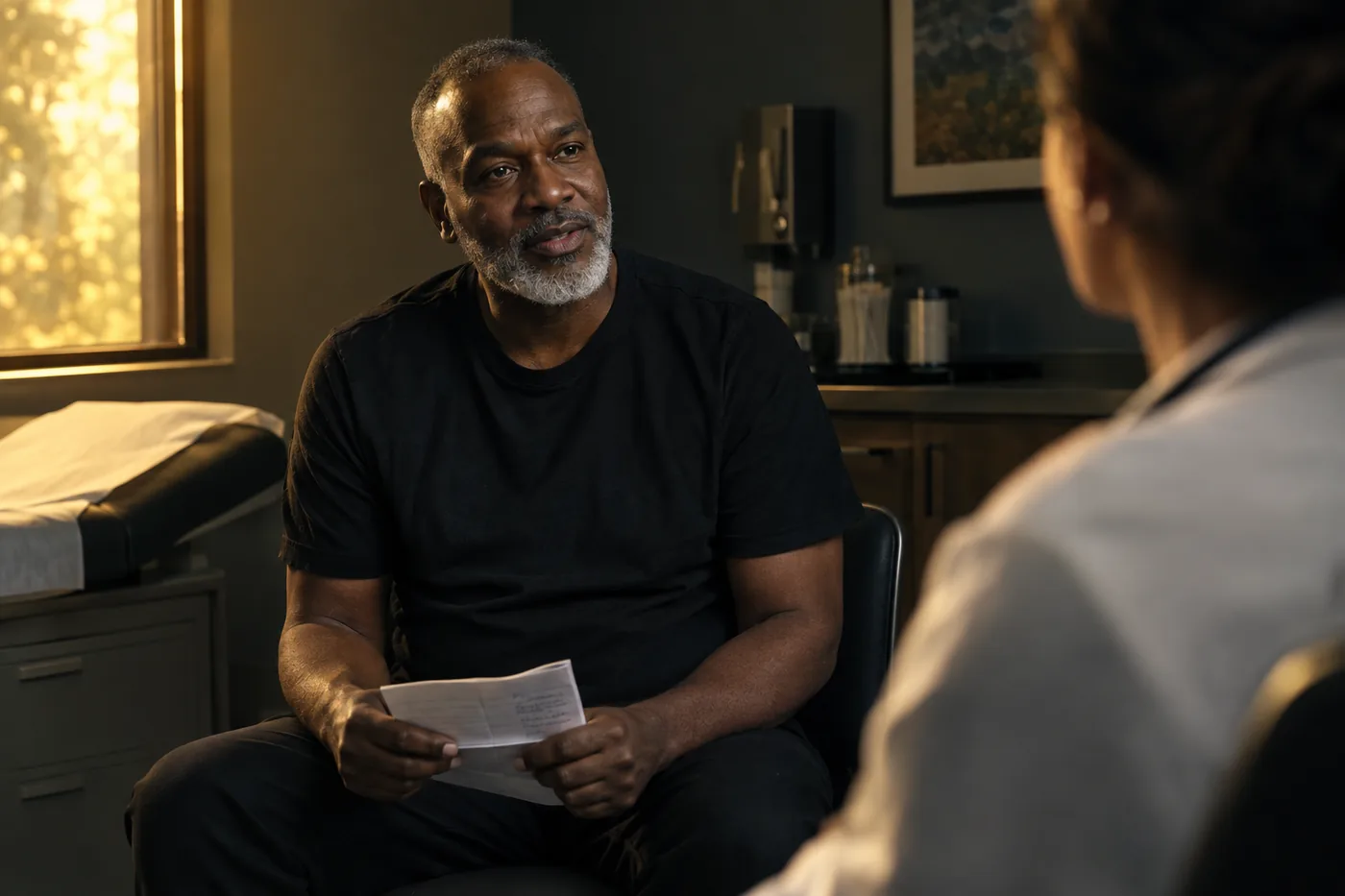
Most of what goes wrong in a medical appointment is not malice. It is arithmetic. There is a limited amount of time, a list of things the clinic needs to cover for its own reasons, and a patient who has been waiting long enough to have mentally rehearsed and then abandoned three of his four questions. The concern you actually came in with gets mentioned at minute eight, on the way out the door, and never makes it into the chart.
You cannot add time to the visit. You can decide what the time gets spent on, and that is almost entirely a function of what you do before you walk in.
If it is not in the chart, it did not happen. Getting your concern written down is the whole game.
The one page you bring with you
Write this out — on paper, not on a phone — and hand a copy to the clinician at the start. Handing over a sheet changes the dynamic of a visit more than anything else we have tried.
- My top three concerns, in order. Three, not eight. Ranked, so that if only one gets addressed, it is the right one.
- What changed, and when. "Winded climbing my own stairs since around June" is a clinical fact. "I have not been feeling right" is not.
- Every medication and supplement, with doses. Including the ones somebody at the barbershop recommended. Especially those.
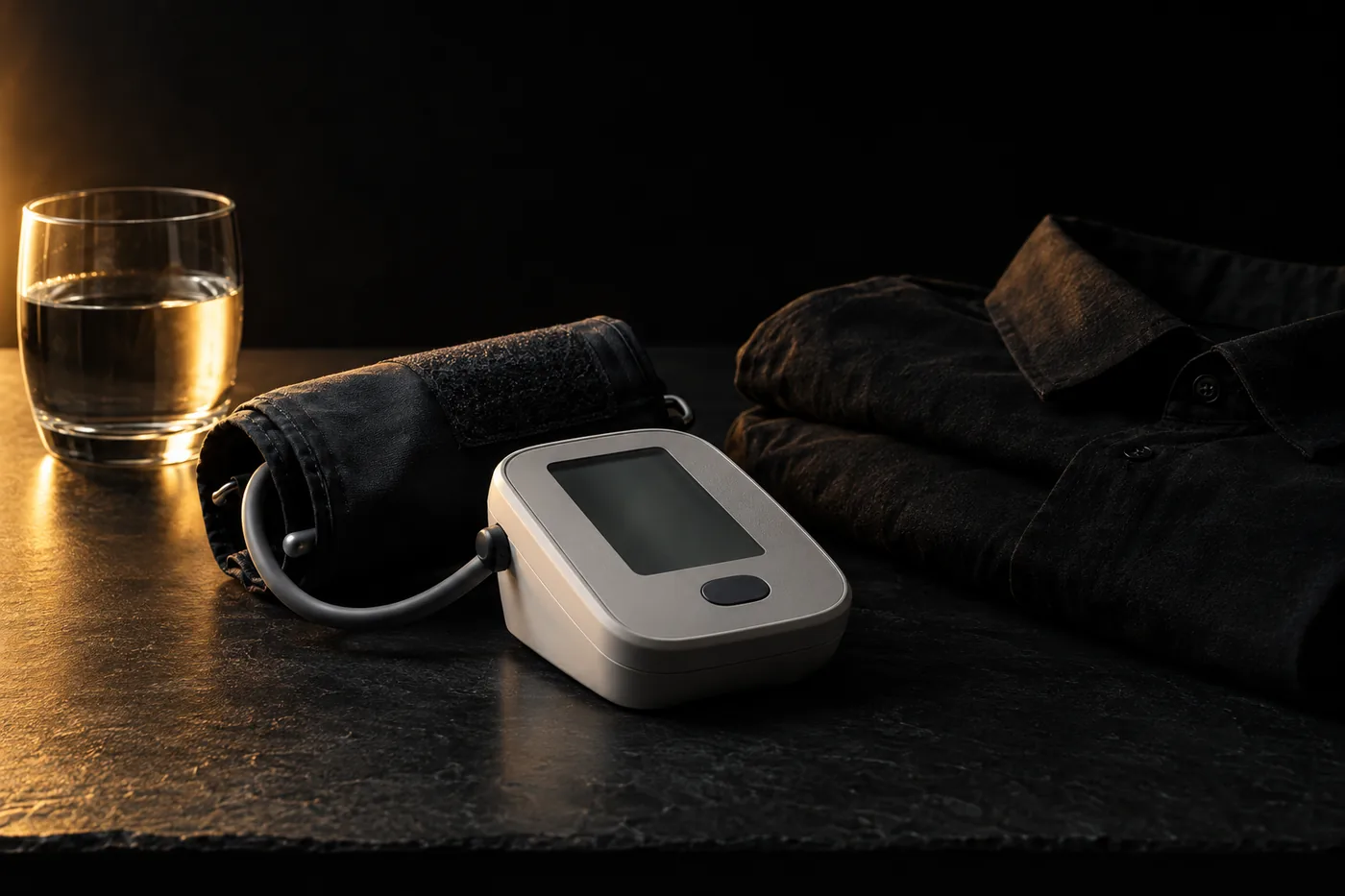
- My numbers. Home blood pressure log, weight trend, glucose readings if you take them.
- Family history, one line each. Who, what, at what age. Age at diagnosis is the part that changes decisions.
- What I want out of today. A test, a referral, a medication review, an explanation. Say it out loud in the first two minutes.
The four sentences that do the heavy lifting
These are not confrontational. Every one of them is a normal request that a good clinician will welcome and a rushed one needs to hear.
"Can we put that in the notes?"
Use it when you raise a symptom and the response is reassurance. You are not disputing the reassurance. You are creating a dated record, so that if the same thing is still happening in four months, there is a starting point instead of a fresh conversation.
"What else could this be?"
The single most useful question in medicine. It invites the differential diagnosis rather than accepting the first explanation, and it is asked with curiosity rather than suspicion.
"What would make you worry?"
This converts "let's watch it" into an actual plan with a trigger. Now you know what changes mean call back, instead of guessing.
"I would like a copy of my results, including the actual numbers."
Not "normal." The numbers. Under US federal rules you are entitled to your records, and most systems will release results to a patient portal. Keeping your own numbers over time is how you notice a trend that no single visit would flag.
The lab panel worth asking for by name
- Blood pressure, taken properly, plus your own home log. How to measure it correctly.
- A1c — a three-month average of blood sugar. Non-Hispanic Black adults have among the highest rates of diagnosed diabetes the CDC reports, at 12.2%.
- Lipid panel — and ask what your target is, given your other risks, not just whether it is flagged.
- eGFR and urine albumin for kidney function. Since 2021 the recommended equations no longer apply a race coefficient, so older results may not be directly comparable to new ones.
- Baseline PSA, with the timeline discussed. Why the guidance for us starts earlier.
- Colorectal screening status — the Task Force recommends screening from age 45.
- A sleep question. If you snore heavily or wake unrested, ask about a sleep study. In one community study of African American adults, about 24% had moderate-to-severe sleep apnea on testing but only 5% of those had a physician diagnosis.
When you are not being taken seriously
It happens, and pretending otherwise does nobody any favours. What works is specific and unemotional.
- Bring someone. A second person in the room changes the length and tone of a visit, and remembers what you will not.
- Ask for the reasoning in writing. "Can you note why we are not ordering that test?" Nearly every refusal that would not survive documentation quietly disappears.
- Use the portal afterwards. A written message creates a record and usually gets a written answer.
- Ask for a second opinion by name. It is a normal, expected part of the system, not a betrayal of your doctor.
- Change clinicians if you need to. A relationship where you are not heard is not a relationship worth ten years of loyalty.
Why we are this specific about it
Because the background numbers are not neutral. Hypertension affects 58% of non-Hispanic Black adults, first-stroke risk is nearly double, and prostate cancer appears years earlier. When the stakes in a nine-minute visit are that unevenly distributed, preparation is not fussiness. It is the cheapest intervention available to you, and the only one that is entirely in your hands.
Sources
- CDC, QuickStats: hypertension prevalence, MMWR.
- CDC, Stroke Facts.
- CDC, National Diabetes Statistics Report.
- American Kidney Fund, eGFR test change: removal of race from the calculation.
- US Preventive Services Task Force, Colorectal Cancer: Screening.
- Prevalence and correlates of obstructive sleep apnea among African Americans, PMC.
- Prostate Cancer Foundation guideline review, PubMed.
Which tests are appropriate for you depends on your history, and not every item above is recommended for every man. The purpose of this list is to make the conversation possible, not to order it for you.