Our culture, our food, and our traditions are meant to be celebrated—not abandoned. Enjoy the catfish, yams, collard greens, mac and cheese, a good bourbon, or a fine cigar when the moment calls for it.
BYLT is about starting where you are and making realistic changes that support a longer, healthier life. We focus on adding more movement, better nutrition, stronger habits, and meaningful wellness practices—while enjoying life’s pleasures in moderation.
Forget the bench press and the 5K for a moment. One of the simplest ways to check how well your body is aging is sitting down and standing back up from a chair — for 30 seconds. Here is how to run it, and where the benchmark numbers actually come from.
By Dave Davis ·· 6 min read
The organising frame
B.Y.L.T. — Built for Your Legacy Today
Everything on this site hangs off four pillars. Each one is a standing area of work with its own articles, assessments, challenges, and — in time — coaching. Pick the one that matches what you need this month and start there.
Body
Build functional strength, muscle, mobility, balance, and endurance — the capacities that decide whether you stay independent, not how you look in a shirt.
Know your numbers and make prevention a regular practice. Blood pressure, A1c, lipids, kidney function, PSA — tracked over time, in your own records, not guessed at.
Daily routines that support energy, nutrition, stress management, and confidence. The small repeatable things that decide how the other pillars actually go.
Whichever pillar you start with, the sequence is the same three moves. It is deliberately short, because the men who make progress are the ones who did not need a twelve-week onboarding to begin.
01
Assess
Find your current baseline across movement, strength, sleep, nutrition, stress, and preventative health habits. Not a score to feel bad about — a starting line you can measure against in ninety days.
Sit-to-stand, single-leg balance, wall push-ups, and reach tests as your movement baseline
The lab numbers worth having in writing before you change anything
An honest week of sleep, food, and stress, recorded rather than remembered
Live now — six tests, one chair, about twenty minutes
Get practical language and guidance built for the realities of life after 50 — joints with opinions, a job, grandkids, and a clinic that gives you nine minutes. Plain English, every claim linked to its source.
Articles organised by pillar, not by whatever is trending
Scripts for the exam room and the questions that change the answer
The weekly digest: one email, one question worth taking to your doctor
Challenges and routines that turn knowledge into lasting habit. Short commitments, repeated, with somebody expecting to hear from you at the end of them.
Two-session weeks and 30-day challenges you can actually keep
Printable trackers for pressure, movement, and sleep
Accountability groups, and one-to-one coaching later on
The average primary-care visit is short and getting shorter. Here is a one-page method — written down before you go — for making sure your concerns end up in the chart instead of in the parking lot.
The three concerns to name in the first two minutes
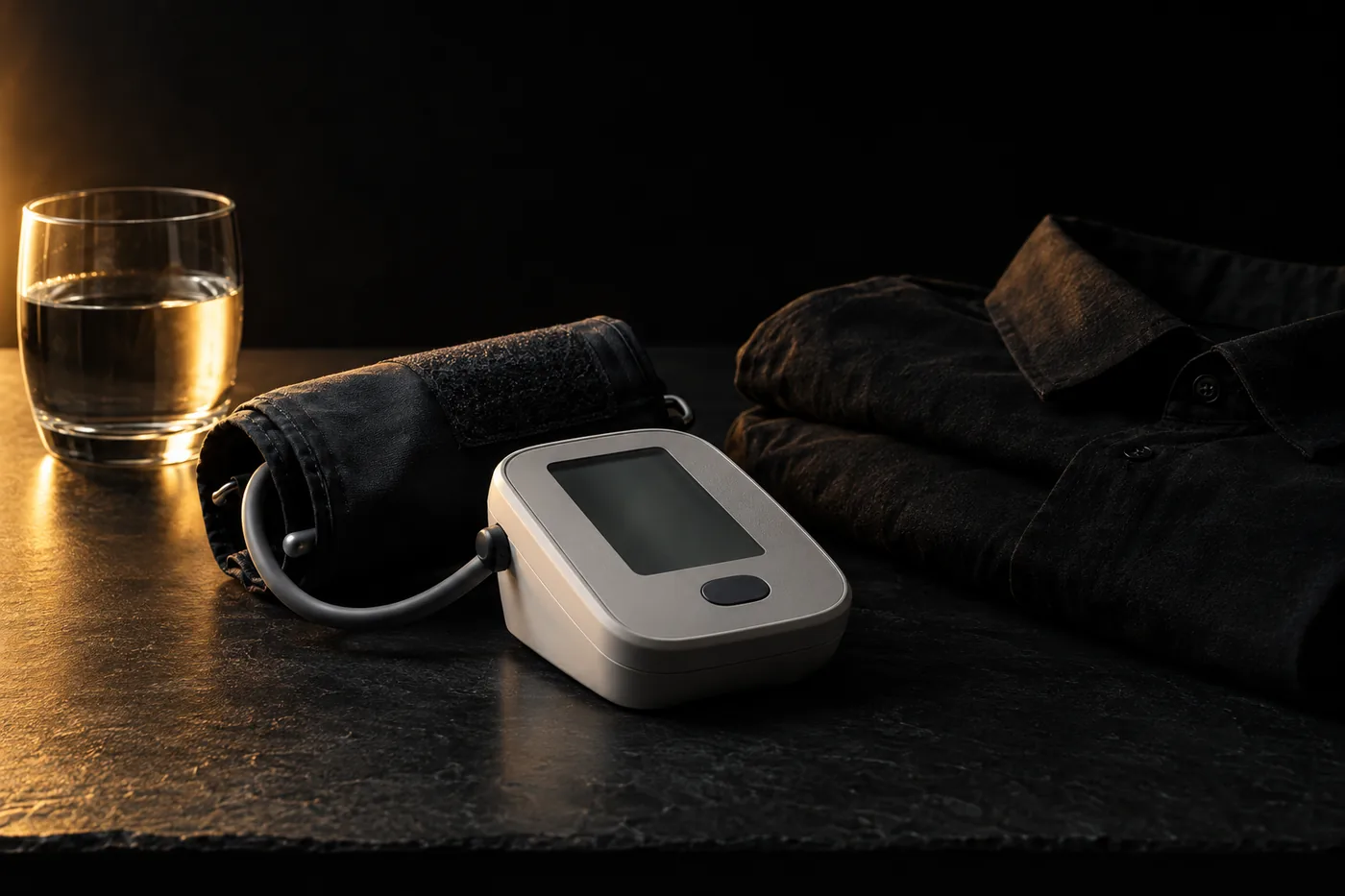
Hypertension is more common among Black adults than any other group in the country. Here is how to read your own numbers, how to measure them properly at home, and when the reading is a real emergency.
Guidance for Black men starts earlier than the general recommendation, and the reasons are specific. What a baseline PSA is, what it is not, and the exact sentence to say if a clinician tells you to wait.
You lose a measurable share of muscle every decade after 50, and losing it quietly costs you independence. What the research says about starting to lift in your fifties, sixties, and beyond.
One sturdy chair, a timer, and thirty seconds gives you a real read on lower-body strength, balance, and endurance. How to run it properly, and where the benchmark numbers actually come from.
Part of our exam-room guide: the routine tests most worth requesting after 50, what each one is looking for, and how to ask for a copy of every result in writing.
· Part of a series
The numbers
Why this site is aimed at us specifically
These are not motivational statistics. They are the reasons the standard advice needs adjusting — each one links to the agency or journal it came from.
58%
of non-Hispanic Black adults have hypertension — the highest of any group measured, against 44.5% of adults overall.
Modelling studies indicate prostate cancer develops 3 to 9 years earlier in Black men, which is why baseline PSA discussions are recommended in the early 40s.
Articles are the front door. Underneath them, each pillar carries the same four kinds of resource, so you always know what you are looking for and what stage it is at.
Each Friday: the week’s articles, one question worth taking to your next appointment, and a plain-English read on any health news that actually affects men our age.
No advertising, no sponsored supplements, nothing to buy
Your address is never sold or shared
One click to unsubscribe, no questions asked
Get Friday’s issue
How we source
Our rules, written down so you can hold us to them
01
Every claim links out
If we state a number, the sentence links to the agency, guideline, or peer-reviewed paper it came from — not to another blog summarising it.
02
Guidelines over anecdote
We lead with published guidance from bodies like the CDC, the US Preventive Services Task Force, and the major specialty societies, and we name them.
03
We say when evidence is thin
Where the research on Black men specifically is limited or contested, we say so in the article instead of rounding it up into a confident claim.
04
Nothing for sale
No supplements, no affiliate links, no sponsored posts, no programme to upsell. If that ever changes, it will be disclosed at the top of every page.
05
Corrections stay visible
When we get something wrong we fix it and leave a dated correction note on the article rather than quietly editing it.
About this site
Why I created B.Y.L.T. BLACK
In January 2025, just days after my 57th birthday, I survived a life-threatening pulmonary embolism after feeling chest tightness following a round of golf. Despite a lifetime of fitness—as a runner, cyclist, bodybuilder, strength coach, and facility owner—the experience changed everything.
My recovery led me to take a deeper look at longevity, prevention, and the everyday choices that help us live healthier, stronger, and longer. I created B.Y.L.T. BLACK not only for myself, but for my brothers—so we can enjoy these later years of life with more strength, purpose, and time.